Is the plant a teacher?
On this page, several traditions answer in turn, each in its own way. The answers come from different places, people and times, from a village in Oaxaca to the islands of Vanuatu, and from accounts written down around 1900 to interviews recorded in the 2010s. Each answer is what particular people said or did, as an article on our site reports it.
-
Zapotec Holy Mushrooms of El Peral
Central America, Mexico
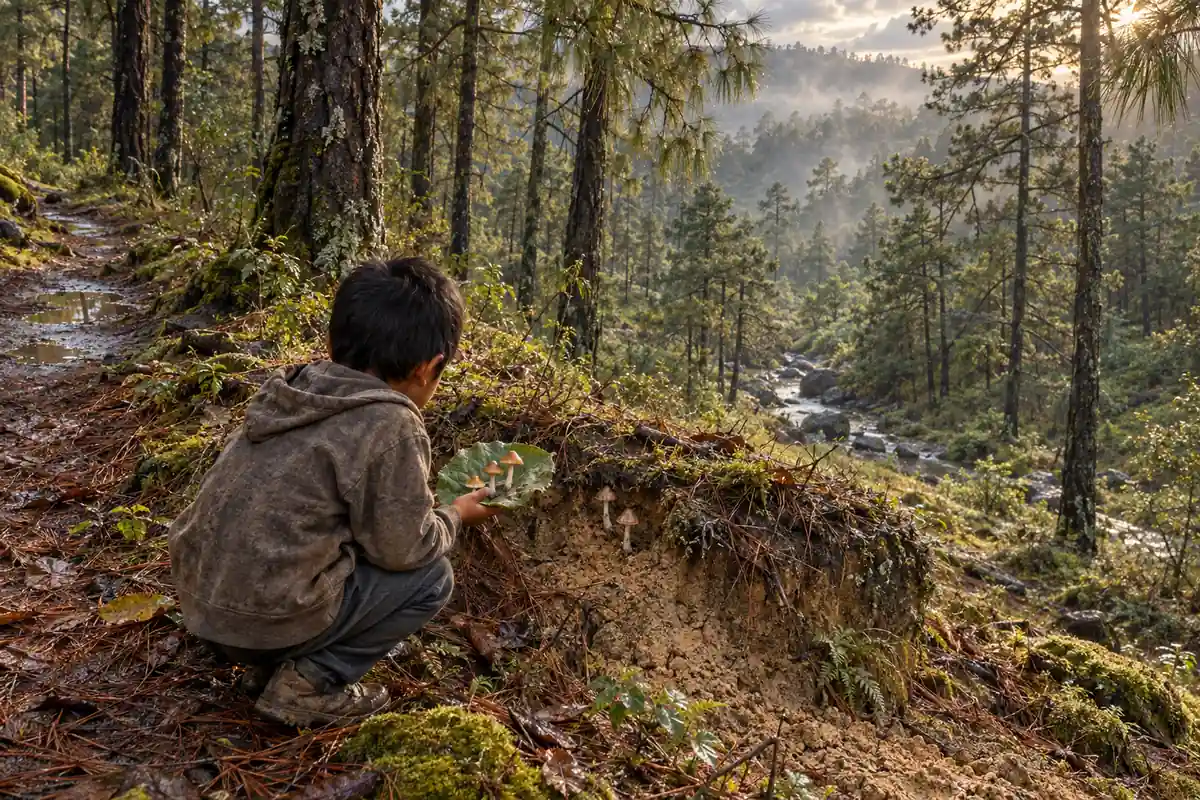
In El Peral, a Zapotec village in Oaxaca, Mexico, people speak of the mushroom as a person. “The mushroom is very smart,” one woman said. At night it talks, names the remedy and gives the answer, and it can become angry if things are done badly. An older woman said to ask its permission and talk to it first.
before consuming these mushrooms, you should ask their permission and talk to them
In the article, section A mushroom that speaks -
Koryak Fly Agaric
Northern Asia, Russia
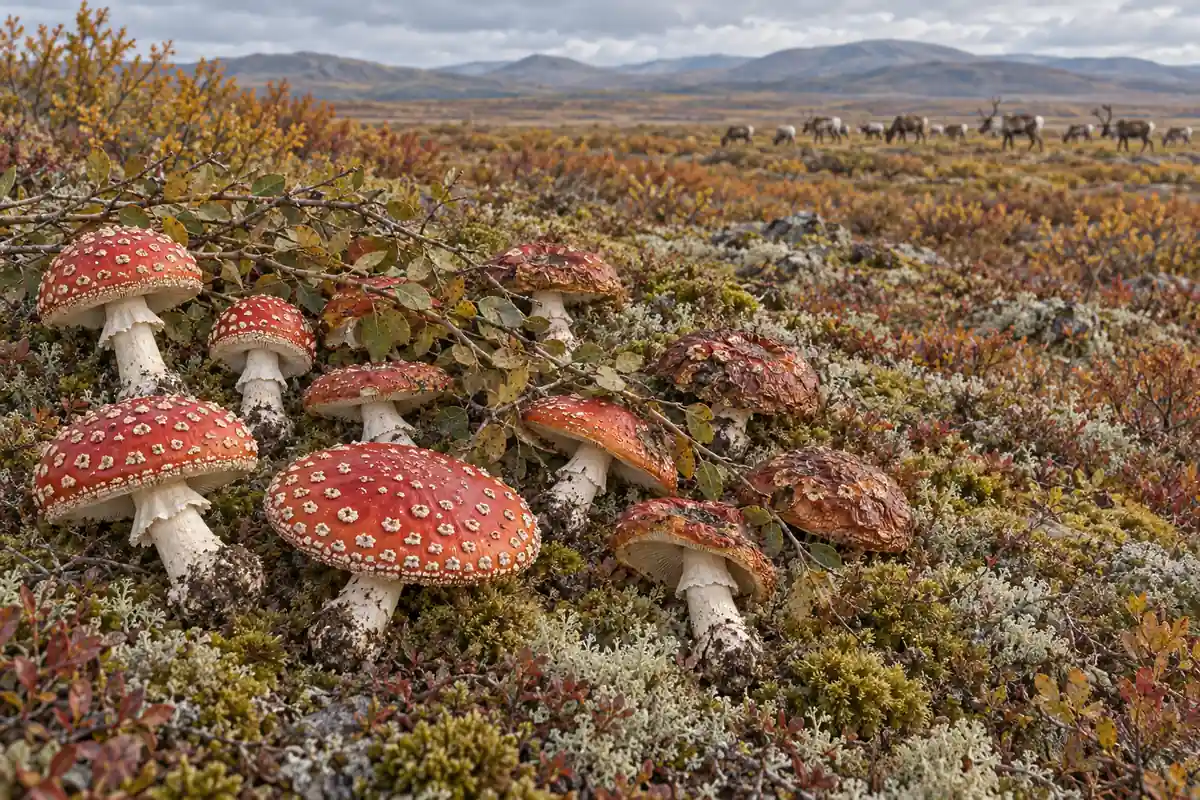
In Koryak accounts from Kamchatka, from around 1900 to the 2010s, a person who has eaten fly agaric does what the mushroom’s spirits tell them. In a myth recorded around 1900, the creator figure Big-Raven lets the agaric remain on earth so his children may “see what it will show them.” It can grant hidden knowledge, deceive, punish or kill.
a person who has eaten fly agaric does what the spirits in the mushroom tell them to do
In the article, section A being with a will of its own -
Mazatec ska Pastora
Central America, Mexico
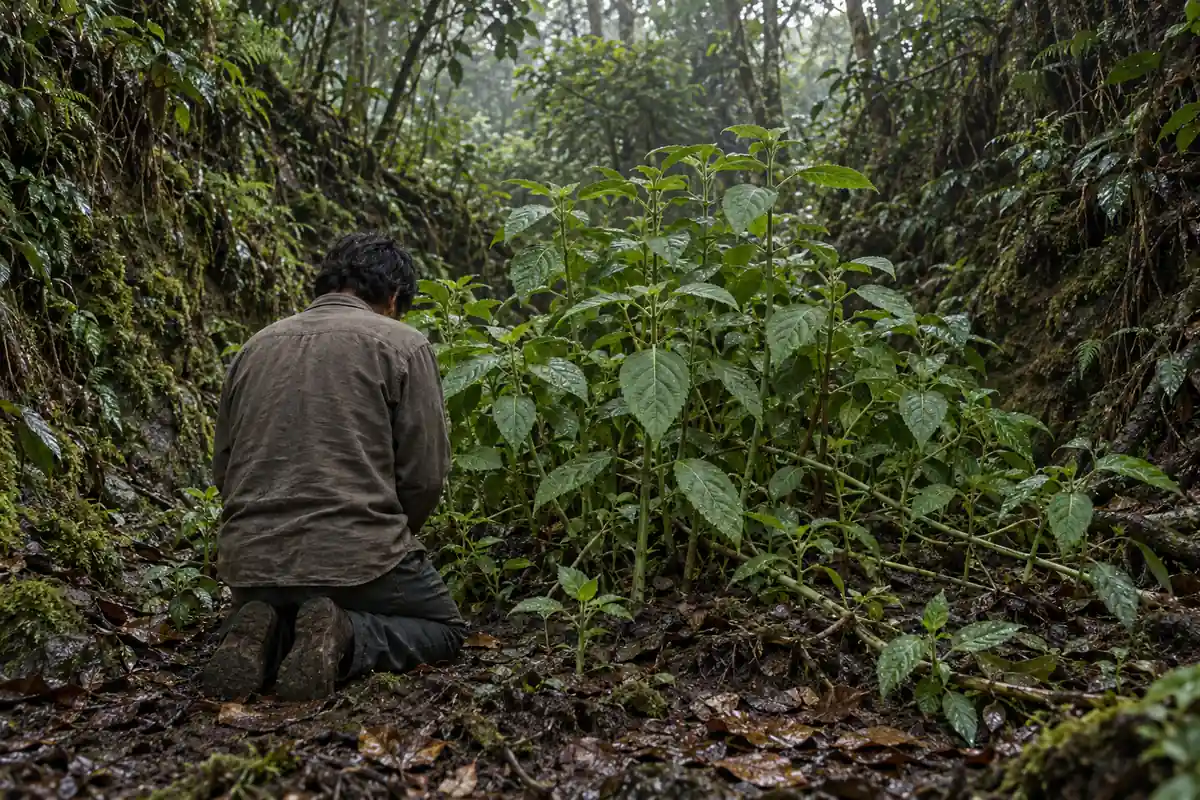
Mazatecs in Oaxaca, Mexico, call Salvia divinorum “leaves of the Shepherdess.” In fieldwork published in 2018, participants described a gentle feminine presence and a soft female voice that answered or advised them. They did not agree on who she is. Some believe she is the Virgin Mary; others, the goddess of plants and animals or the soul of Mother Nature.
They did not agree on who she is.
In the article, section The Shepherdess and her family -
Vegetalismo plant dieta
South America, Peru
In vegetalismo, plant healing of the Peruvian Amazon, some plant spirits are said to instruct a person who approaches them correctly. Healers call such plants plantas maestras, “master plants.” The spirits teach diagnosis, remedies and, above all, songs. Of one mushroom, a healer said that if you keep the dieta, a restricted diet in seclusion, “it might teach you medicine.”
some of these spirits will instruct a person who approaches them correctly
In the article, sections Plants that teach and The dieta -
Vanuatu kava drinking and exchange
Melanesia, Vanuatu
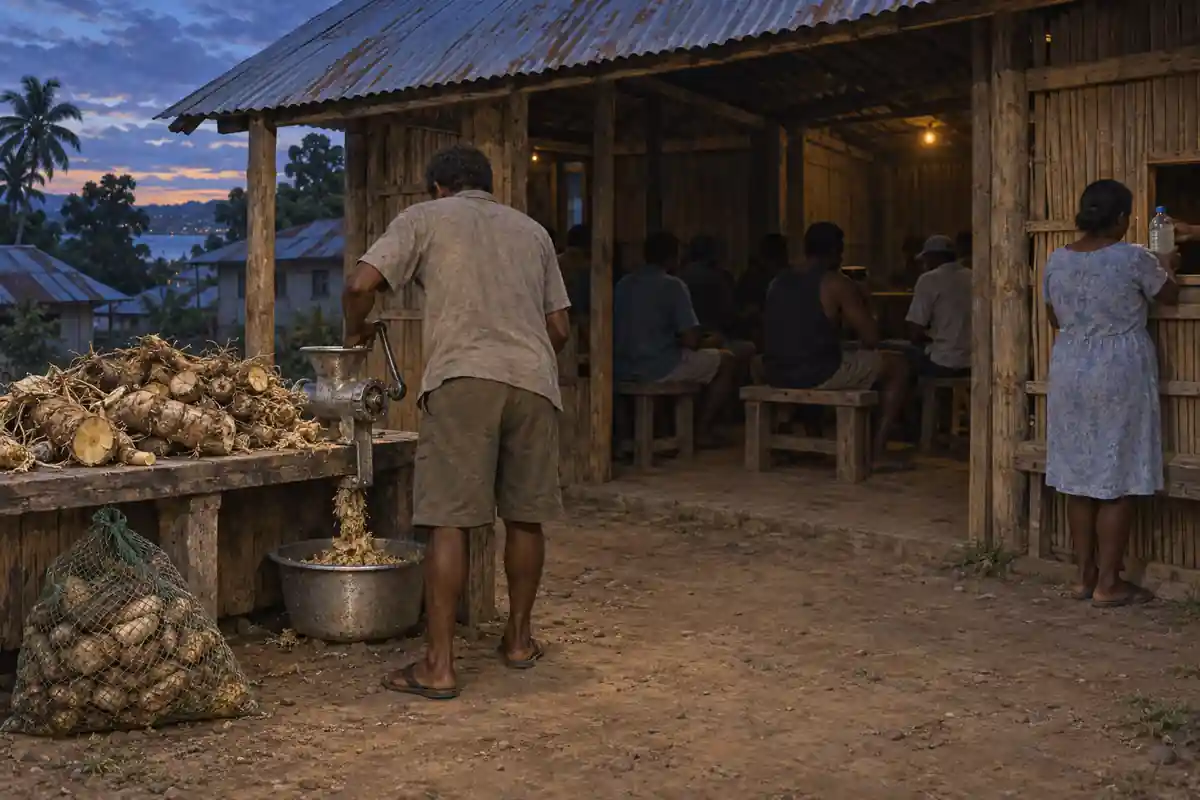
Kava, a drink made from a pepper shrub’s rootstock, is not a hallucinogen. In Vanuatu around 1990, it served two purposes with the unseen: sometimes a gift to the gods, poured or spat into the air, at other times “a passkey to the supernatural realm,” where men might overhear their ancestors’ voices. Kava drunkenness was understood to bring new knowledge.
a passkey to the supernatural realm
In the article, section Quiet and the voices of ancestors -
Piaroa Yopo Shamanism
South America, Venezuela, Colombia
Among the Venezuelan and Colombian Piaroa, the shaman the anthropologist Robin Rodd apprenticed with around 2000 said yopo, a snuff, “is not a teacher. It is the shaman that sees.” Here plants have no power or knowledge of their own. Shamans place power and responsibility in the user, whose märipa, power to cure or harm, grows from talent and effort.
In this understanding, plants have neither power nor knowledge of their own.
In the article, section A Snuff That Does Not Teach