Ayahuasca: who drinks, and how does it heal?
Who drinks ayahuasca at a healing? Some healers insist the patient must not; others give the patient a little, or refuse no one who asks. Healing differs as much, from a song that draws illness out, to a spiritual cure that doesn’t depend on the body getting well. Six traditions answer in turn, in accounts recorded between the early 1980s and 2024. Each answer is what particular people said or did, as an article on our site reports it.
-
Shipibo-Konibo Oni Healing
South America, Peru
Elder Shipibo-Konibo healers in the Peruvian Amazon object: “The patient should not drink,” one said in 2024. The healer, the onanya, whistles over the drink, then drinks and watches until the cause of the illness emerges; the song, bewa, reveals and removes it. “Nobody teaches you the song,” an elder said; “the people of the medicinal plants teach you.” A healing family wrote in 2021 that their grandfather insisted, “in the end, it is God who cures the patients.”
We are the ones who have to drink to know what the patient is sick with
In the article, section The healer drinks, the song heals -
Shuar Natem (Ayahuasca) Healing
South America, Ecuador
In Shaime, Ecuador, in 2014, a Shuar healer drank natem, ayahuasca, and took tobacco, whose spirit is understood to show him the illness. Patients drank too; vomiting was welcomed as a cleansing. Many illnesses are understood here as invisible arrows from sorcerers and evil spirits; in visions the healer saw them and sucked one out as a stone, the sign of a cure. Healers who cure work with natem only until midnight; those who work after midnight cause harm.
In the visionary state he could see the arrows lodged in the patient's body.
In the article, section A night of healing -
Huni Kuin Nixi Pae Ceremonies
South America, Brazil, Peru
Huni Kuin of Brazil and Peru, on the Purus River in the 1990s and 2010s, most often said they drink nixi pae, ayahuasca, to see what nonhuman beings are doing to a person. A shaman may drink to discover a spell; the patient sat beside him and drank a little, so the shaman could see him in visions. Healing depends on the song: the singer sings a distressed person’s eye soul “back to your head, back to your body.”
drank a little so that the shaman could see the patient in visions
In the article, sections Drinking to see and The songs that lead the way -
Eastern Tukanoan Yajé and Yuruparí
South America, Colombia, Brazil
In a Desana author’s account, ayahuasca is served first to the specialists, then to everyone else. At two Tukano feasts in Brazil it is for men, though the yʉʉgo, a woman singer, drinks a little to sing. On Colombia’s Pirá Paraná river, healing extends to the territory, described as “a human body that breathes, feels and has organs.” There specialists, the Jaguars of Yuruparí, prepare through its visions to find an illness’s source, and heal by retracing its origin.
they heal by retracing the history of its origin in order to remove it
In the article, sections Inside a ceremony and Healing a living territory -
Vegetalismo plant dieta
South America, Peru
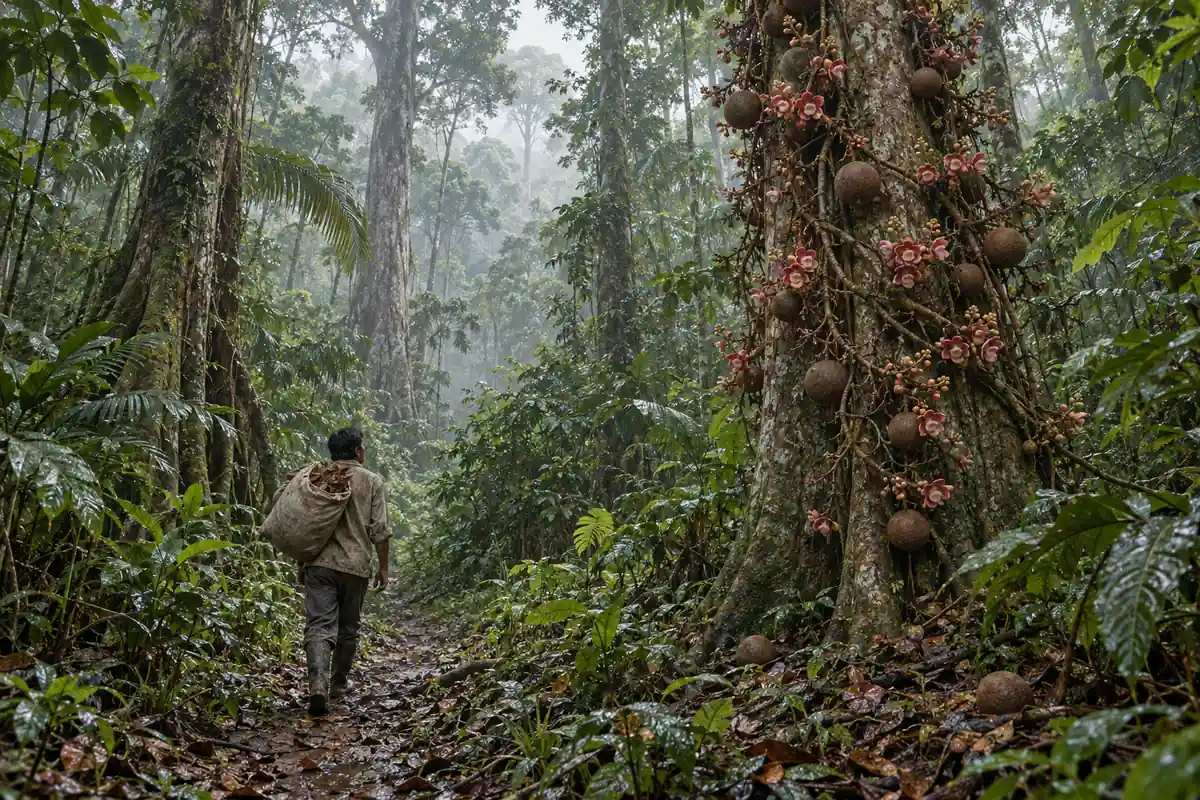
In the Peruvian Amazon, healers interviewed in San Martín in 2015–2017 said the conditions of a dieta, a plant taken in seclusion on a restricted diet, were as important as the plant itself. Several began training while being treated: “I was given teachings and I was also being healed,” one said. Healers around Iquitos in the early 1980s spoke of sorcery stealing a person’s spirit or shooting a magic dart, virote; a healer sucked out illness with his phlegm, yachay.
I was given teachings and I was also being healed
In the article, sections The dieta and Songs, defenses and the danger of the work -
Santo Daime Ayahuasca
South America, Brazil
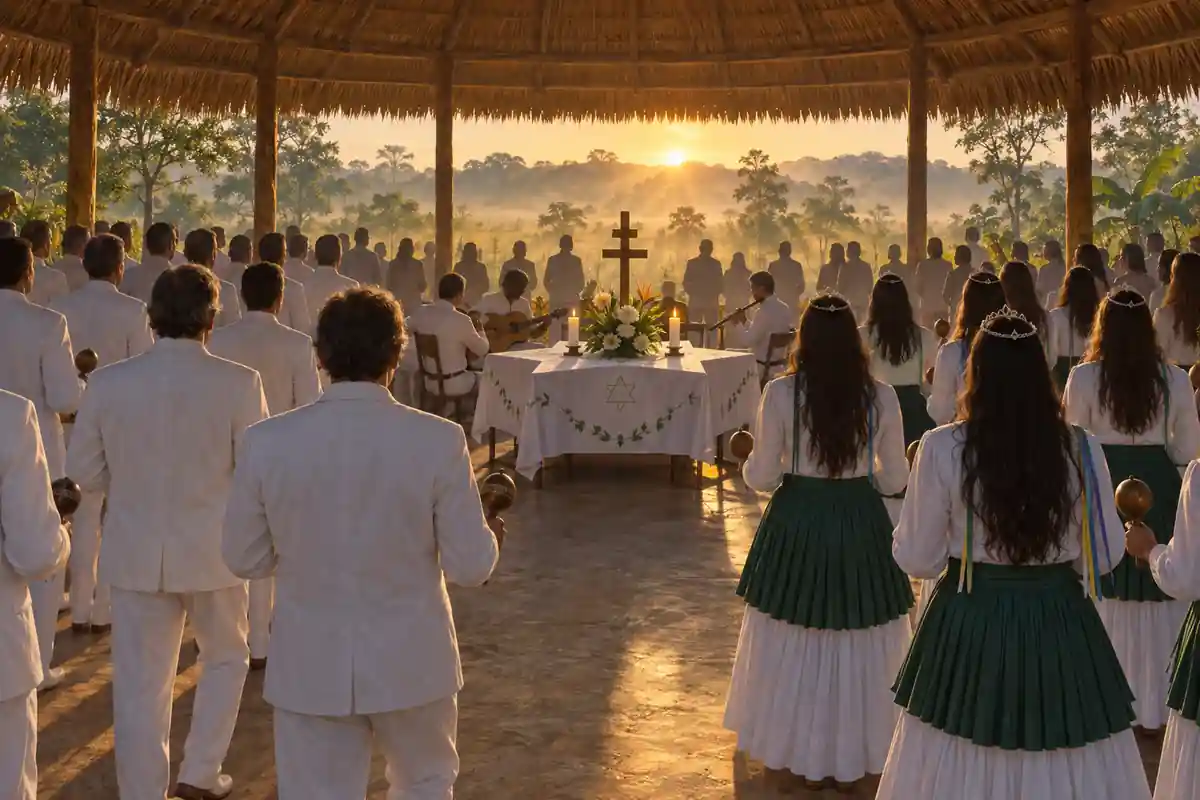
Santo Daime’s founder, Mestre Irineu, gave a merchant charge of the Daime, their ayahuasca, with a rule the merchant recalled in 1993: “Do not offer Daime to anyone, but do not refuse anyone who seeks it.” Most members see illness as the outward sign of spiritual imbalance. Early patients told of being operated on spiritually. Around 2008, a church leader in southern Brazil spoke of a “Law of Merit” and “the spiritual cure,” even when the body is not cured.
Do not offer Daime to anyone, but do not refuse anyone who seeks it.
In the article, section Illness, Merit, and the Spiritual Cure